
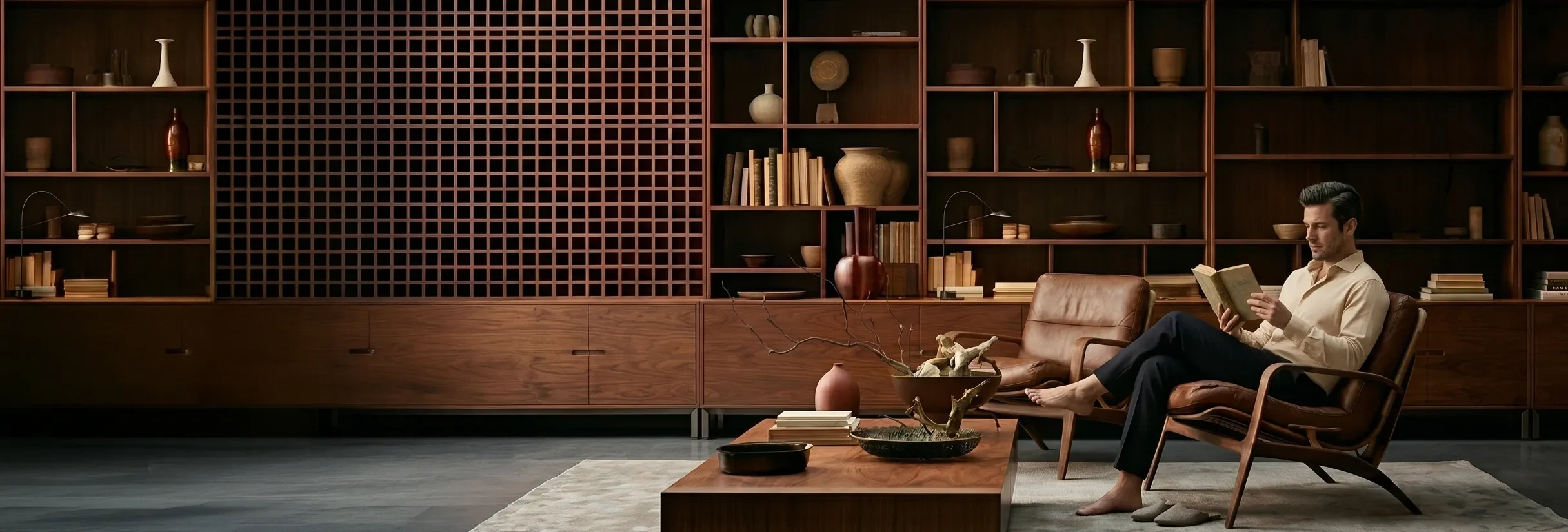
The most
important new trend
is you.
These reflections refer to private living spaces — to places where people live, arrive, and find calm.
Trends
In recent years, trends in interior design have changed enormously compared to the past. Although we were promised some rather peculiar trends for 2026, reason and logic ultimately prevailed. The choice of PANTONE 11-4201 Cloud Dancer as Color of the Year 2026 also shows how strongly the design world is longing for calm, clarity, and conscious reduction.
However, the trends of recent years have not disappeared — they have become more established and more mature.
We have long since stopped simply asking clients what they want and showing them Pinterest images. Instead, we try to get to know people better: their habits, their hobbies, their way of life. The first meeting is often not a conversation about work, but about life – over a cup of coffee and seemingly quite naturally.
Only when you truly know a person can you create a comfortable home for them. Their home.
And precisely this idea is now becoming the most important trend in interior design for private living spaces.
The most important new trend is you.
Your personality, your individuality, your comfort, your story. A home like this will remain relevant even in ten or twenty years – because it does not reflect short-lived trends, but you yourself. Architectural Digest also describes how important it is for interior design to reflect personal style and one’s own story.
Many people are tired of uniform interiors from Instagram and Pinterest. Even if such spaces still seemed beautiful and stylish a year ago, today they often appear almost like a cliché. The mass market has actively adopted Instagram trends: soft, voluminous furniture, rounded shapes, organic lines. This aesthetic has become so widely accessible that interior design has lost a great deal of exclusivity.
Now the moment has come when the market is saturated and completely different values are moving into focus. The fact that interiors without personality can quickly feel interchangeable is also made clear in an Architectural Digest article on common design mistakes.
When all current tendencies in interior design are brought down to one common denominator, it becomes clear: the most important trend today is not a particular material, color, shape, or style. The most important trend is the person.
We are moving away from sterile, uniform, overly perfect interiors. Away from spaces that look flawless, but in which no life can be felt. In their place come individuality, character, and emotion.
An interior should not feel like the display window of an expensive boutique or an exclusive furniture showroom. It should feel like a home. And a home should be warm, cozy, and comfortable: matte surfaces, soft lighting, textured materials, no harsh edges, no sterile, clinical atmosphere.
Today, tactility is more important.
It is about a surface creating the desire to touch it. It is precisely the texture of materials that gives a room character. Modern solutions do not mean following every trend. They are about conscious decisions – so that you can live comfortably while the space remains stylish and timeless.
This is why vintage elements, personal objects, pieces with history, and handcrafted one-of-a-kind items are increasingly appearing in interiors again. They make an interior not only modern, but also personal. They give it mood and the feeling that real people live there.
A home should be an extension of your personality. It should reflect your character and individuality. What matters is not to overdo it, so the space does not feel old or worn. The goal is not to design the entire interior as if it came from the 1970s. It is about accents. Often, one or two special objects are more than enough. Then it feels like a subtle, refined detail – not like an attempt to return to the past.
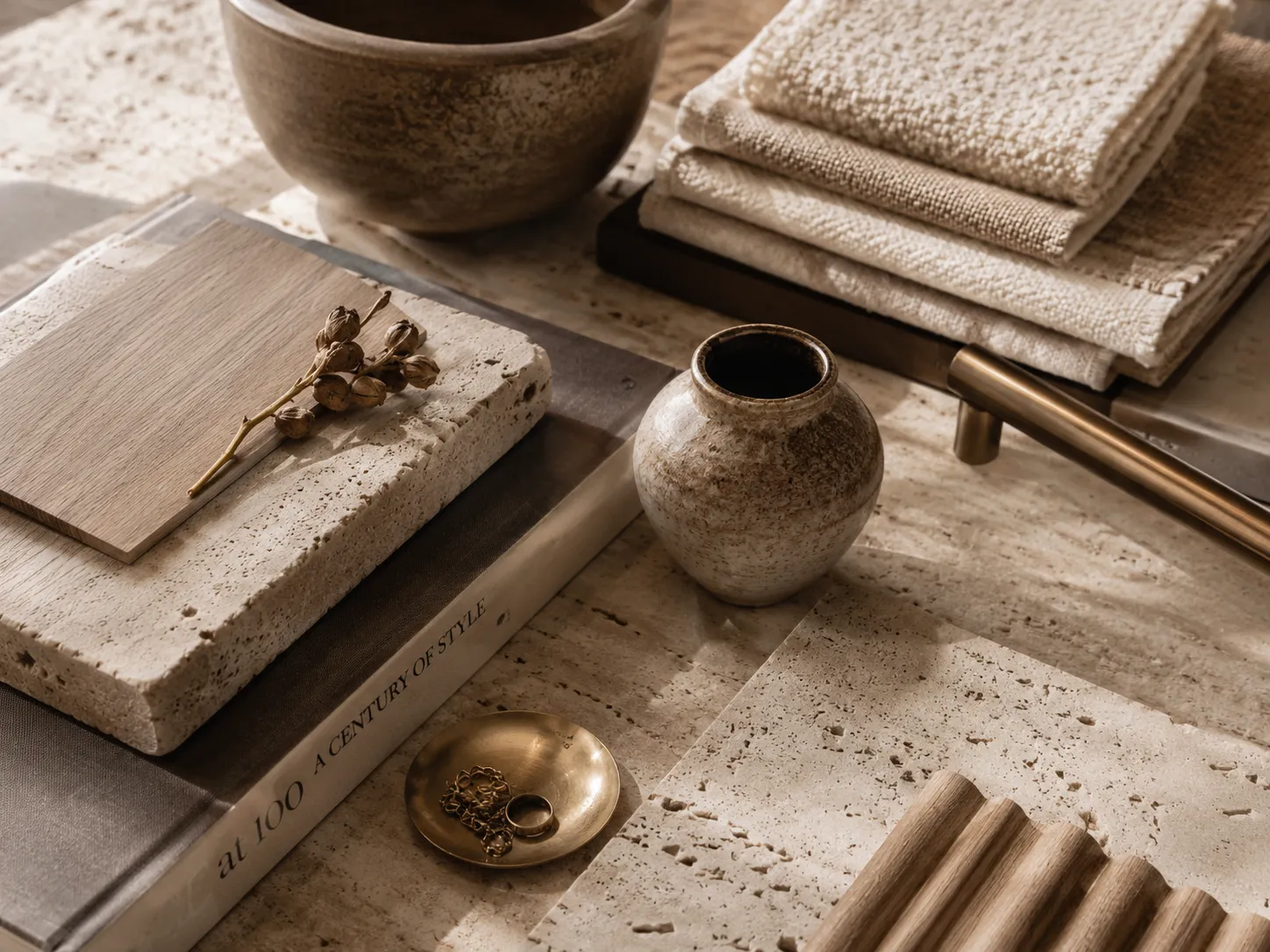
-A modern interior no longer has to strictly follow one single style.
More and more often, we see surprising combinations of different styles and eras. Eclecticism works particularly well because it creates depth. When different materials, moods, and layers of time come together in one space, the interior feels much more valuable, interesting, and human than any overly “clean” style.
This also includes the biophilic approach: more natural light, fewer heavy structures, natural materials, softer forms, calm geometry, and, of course, more life. Everything that feels alive rather than artificial or plastic-like is now perceived as more human and more honest.
ELLE Decor describes similar developments as well: living spaces are becoming more layered, inviting, and personal again – with natural textures, sculptural furniture, and areas designed for quiet moments.
A home is our retreat.
A home is a place of personal rituals, a place that brings calm and restores energy. This trend makes it possible to create an interior that supports mental and physical recovery in the best possible way.
The design of a space becomes an instrument of self-care. The interior is no longer only a question of beauty, but much more a question of rituals: the ritual of waking up, of personal care, of making coffee, of resting, and of working.
And one more very important point is the planning and logic of the space: in a home, there should be a place to work, a place to rest, and a place of silence. Not just some corner with a laptop, but a fully considered workspace – perhaps even an area that can be closed off, allowing you to separate yourself from the outside world at home and immerse yourself in work without distraction.
Just as important is a place where you can relax. For example, an armchair by the window with a small table, where you can read a book in the evening. It can also be a dedicated corner in the bedroom or another room – a place where you can simply be alone with yourself, in peace and quiet.